Build

Build the systems your organisation needs.

We build applications, platforms and connected products around the way your organisation works. From business software to systems connecting devices, data and people, K Stack leads the work from agreed scope through implementation and release.

What we build

Applications. Connected systems. Working together.

001

Business applications and SaaS products

Build portals, internal tools and customer-facing products that support your workflows, with the access, administration and reporting your organisation needs.

002

Integrations and automation

Connect existing platforms, move information between systems and automate repeatable work, from approvals and reconciliation to notifications and reporting.

003

Connected products and device platforms

Bring devices, firmware, connectivity and cloud applications together. Support configuration, monitoring, remote updates and the workflows that turn device data into useful action.

Our build approach

Built to work as one system.

A successful build brings the parts together: application behaviour, data, integrations and the environment where it will run. We build and test these connections throughout delivery, preparing the system for release and ongoing operation.

003 · BUILDRUN 0042 · COMMITTINGCODEPIPELINEPRODUCTTHE CODE+queue.approve()+reconcile.sync()+ota.update()−export.manual()MAINFEATUREMERGEDTHE PIPELINEBUILD42STEST3M 10SPACKAGE18SDEPLOY25STHE PRODUCT, RUNNINGCLOUDNOT LIVEUPTIME100%NOT YET LIVEDEVICEFW 2.3

Illustrative delivery flow. Testing and release requirements depend on the system and agreed scope.

  1. Architecture

    Define how the parts work together.

    Establish the application, data and integration structure around your requirements. For connected products, include the device behaviour and communications the wider system depends on.

  2. Verification

    Test the system in context.

    Check functionality, integrations and failure conditions as the work develops. Include relevant environments, user roles and operating constraints in the agreed test approach.

  3. Release

    Prepare for live operation.

    Plan deployment, configuration, monitoring and handover with your team. For device-based systems, account for installation, updates and behaviour in the field.

Your environment

Build on what already works.

New systems need to fit the platforms, processes and teams around them. We assess what to retain, what to connect and where change is necessary.

  1. 001Existing applications and infrastructure.
  2. 002Data ownership and movement.
  3. 003Access and security requirements.
  4. 004Devices, connectivity and field conditions where relevant.
  5. 005Dependencies on vendors and internal teams.
How delivery works

Clear scope. Visible progress.

Fig 1.1
Scope

Agree the first release

Establish priorities, boundaries and responsibilities, with a clear view of what the first release will deliver.

Fig 1.2
BuildReview

See progress as it happens

Review working software at agreed checkpoints, with visibility of decisions, dependencies and changes.

Fig 1.3
PrepareLive

Prepare your team for handover

Agree the documentation, walkthroughs and operational responsibilities needed to use and maintain the system.

Selected build work

Build in practice.

Plugya · SaaS and mobile delivery

One platform, in the office and in the field.

A SaaS platform connecting proposal management and team administration with mobile field audits and sign-off. K Stack delivered the desktop and mobile applications as parts of one product.
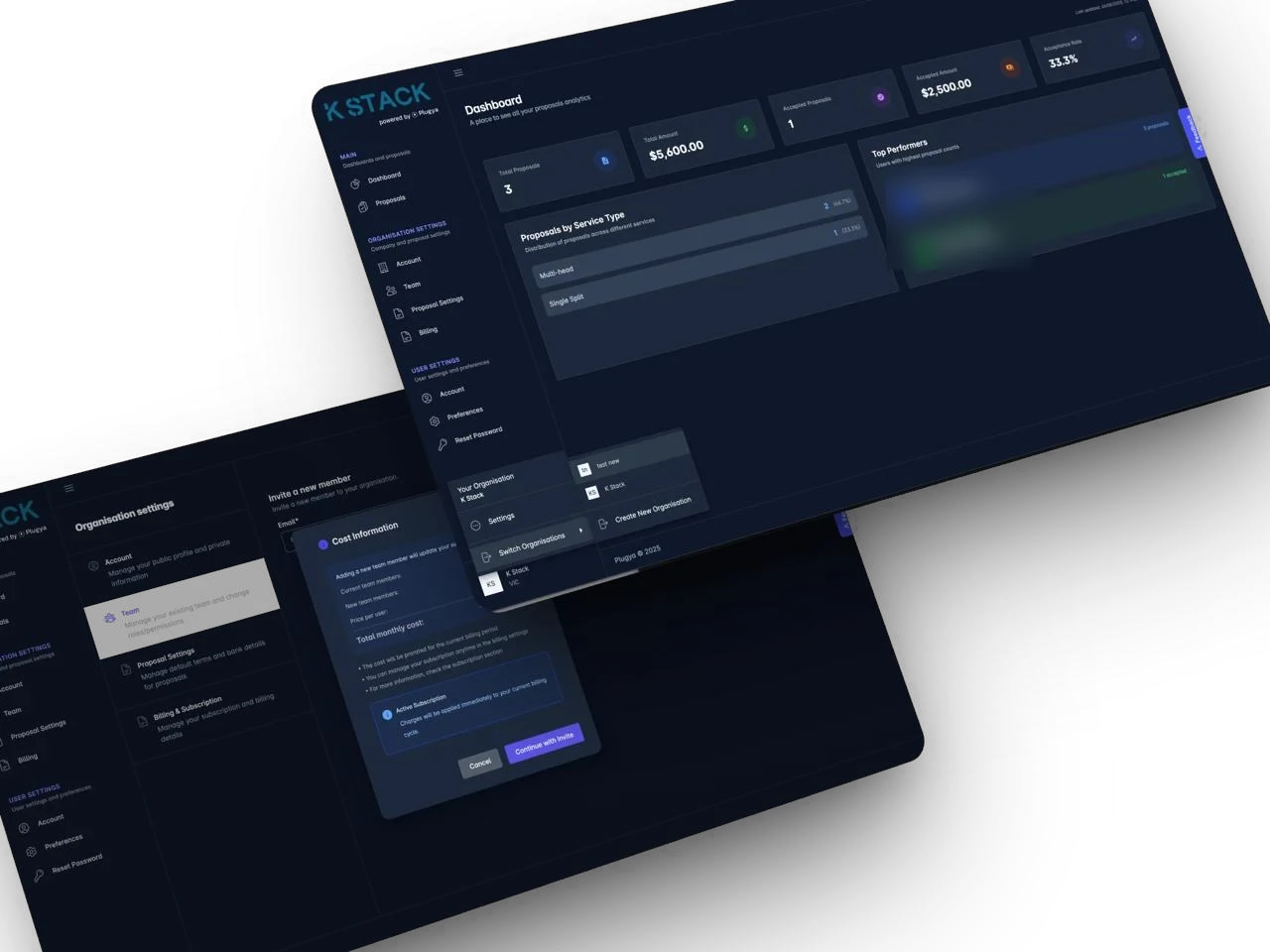
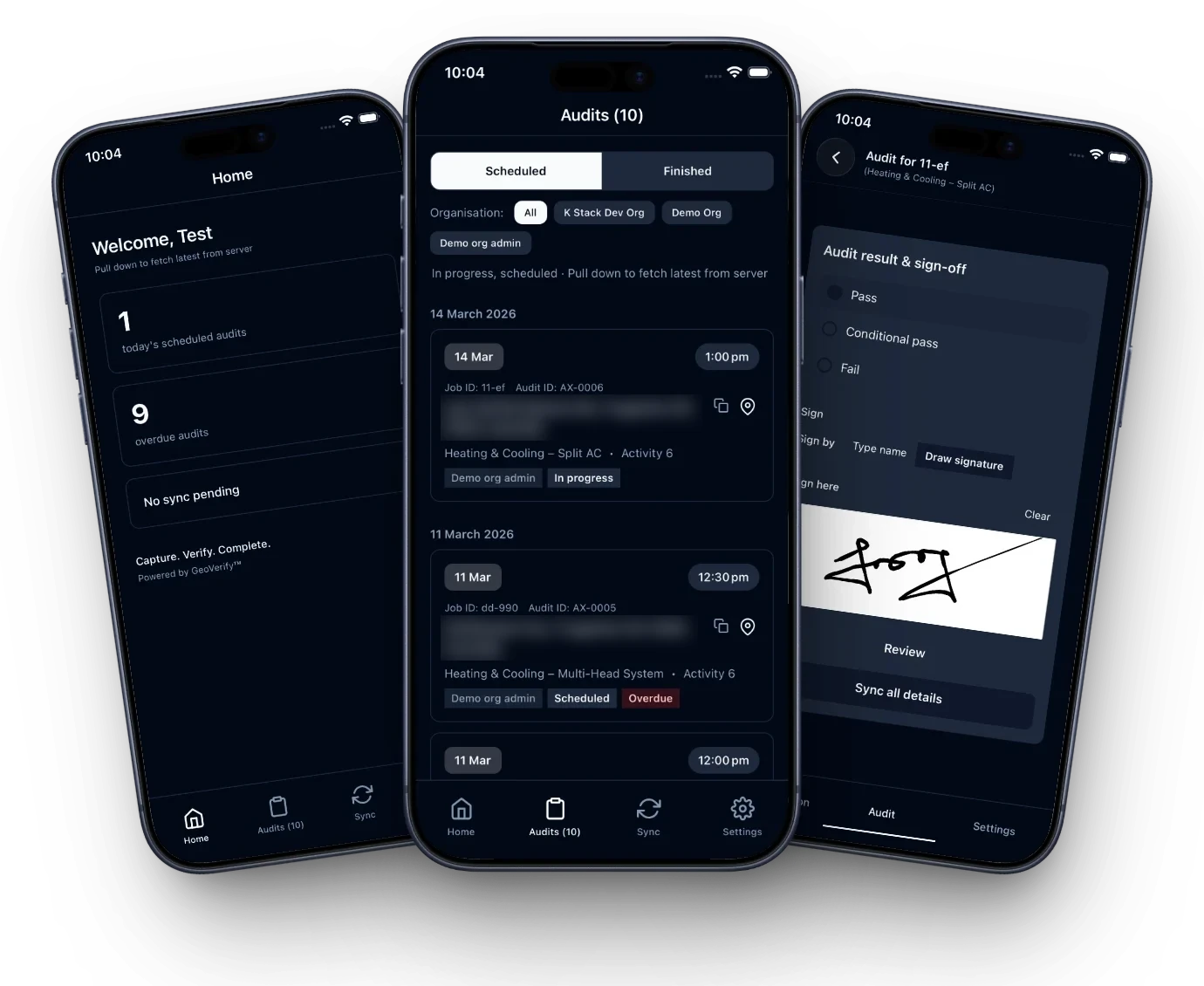
Plugya on desktop: a proposals dashboard with totals, proposals by service type and top performers, over an organisation settings screen for inviting a team member.Plugya mobile app: a home screen, a list of scheduled audits, and an audit result and sign-off screen with a signature.
The desktop platform.The mobile field application.
After launch

Keep the system working and improving.

K Stack can continue with application support, monitoring and planned improvements after release. We agree the support scope and responsibilities around your organisation’s needs.

Questions

Questions about Build.

Can you build from our existing requirements or designs?

Yes. We review the requirements or designs you have with you first, so the scope, dependencies and priorities are clear before implementation. Where important questions remain, we may suggest Discovery or Design first.

Can you improve a system rather than replace it?

Yes. We assess what to retain, what to connect and where change is necessary, and can extend or improve an existing system instead of replacing it.

Can you work with our internal technology team?

Yes. We agree responsibilities on both sides, how the work is reviewed and who owns each part, whether your team works alongside us or takes over after release.

Do you build mobile applications and SaaS products?

Yes. We build SaaS products, portals and mobile applications, including field applications that work alongside a desktop platform.

Can you connect devices with cloud applications?

Yes. We bring devices, firmware, connectivity and cloud applications together, including configuration, monitoring and remote updates. The scope depends on the device and the system around it.

How are testing and release handled?

We check functionality, integrations and failure conditions as the work develops, in the environments and roles agreed for the project. We then plan deployment, configuration, monitoring and handover with your team.

What happens after launch?

K Stack can continue with application support, monitoring and planned improvements. We agree the support scope and responsibilities separately, around your organisation’s needs.

Let’s talk about the work ahead.

Tell us what you’re building or improving, and the systems it needs to work with. We’ll discuss the scope, dependencies and right approach to delivery.